


Your garage door makes your everyday life easier and also helps keep your home secure. However, like any mechanical system, it can experience problems over time.
Understanding the common garage door problems and knowing how to troubleshoot them can save homeowners from unnecessary stress and expenses.
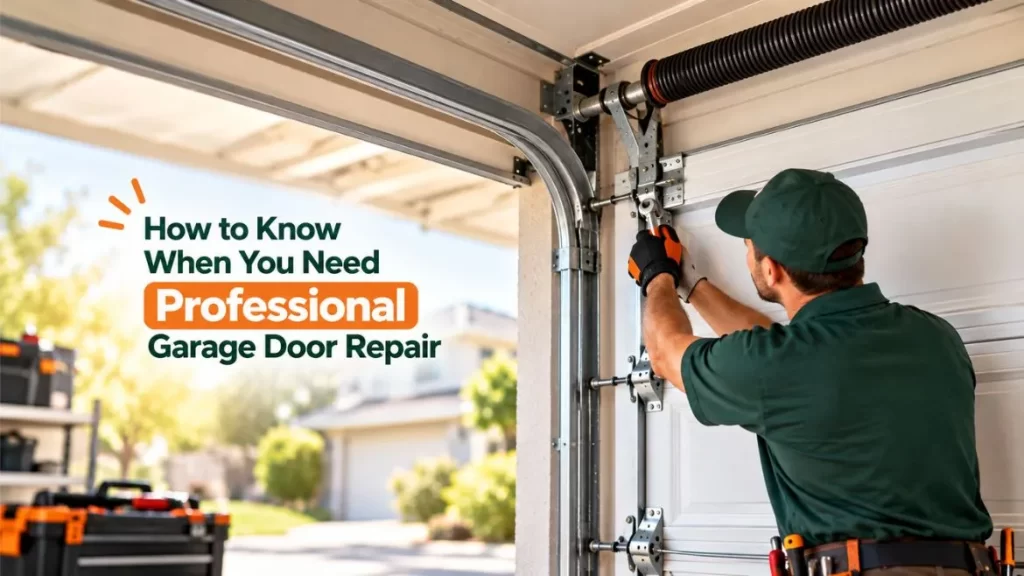
This guide includes the most common garage door issues, a few simple things you can safely check yourself, and the signs that it’s time to call a professional for garage door repair.
| Fix Garage Door Problems Today – (209) 484-8977 |
Garage Door Issues – What to Check and When to Call a Professional
Before assuming something major has failed, you can do a few basic checks to narrow down the problem –
| Problems | What to Check First | When to Call a Professional |
| Door will not move | Power, breaker, remote batteries | Opener runs, but door does not move |
| Door will not close | Clear and clean safety sensors | Sensors stay faulty, or wiring is damaged |
| Loud operation | Check for loose hardware and proper lubrication | Grinding, banging, or repeated jerking |
| Uneven door | Look for obvious track obstructions | Door is crooked, off-track, or sagging |
| Door feels very heavy | Check whether the door feels unusually heavy or difficult to lift | Possible broken spring or cable |
| Door reverses unexpectedly | Check the sensor area for obstructions. | Problem continues after basic checks |
Why Won’t My Garage Door Open or Close?
One of the most frustrating issues is when the garage door refuses to open or close. Here’s what you need to do in those situations –
- The first step is to check the power source. Make sure the opener is plugged in, and the outlet has power. Check the breaker box and make sure that the circuit breaker has not tripped.
- If the power is not the problem, examine the remote control and keypad batteries. If they are weak or dead, replacing them should solve the issue.
- Inspect the safety sensors located near the bottom of the door. If they are misaligned or dirty, clean them and ensure they are properly aligned for the door to function.
Call for a professional garage door repair if these methods don’t resolve the issue. They can inspect the complete system instead of replacing parts based on guesswork.
Why Does My Garage Door Close and Then Open Again?
If the garage door starts to close but immediately reverses, it might be due to an issue with the safety sensors.
You can start by –
- Removing boxes, tools, toys, or other objects near the sensors
- Gently cleaning the sensor lenses
- Checking whether the sensors appear aligned
- Looking for loose or obviously damaged wiring
Direct sunlight, dirt, or a sensor that has been knocked out of position can also cause problems.
But don’t bypass or permanently disable the safety system just to make the door close. If the sensors remain unreliable after basic checks, call for the reliable garage door service homeowners trust to inspect the system.
What Do Loud, Slow, or Jerky Garage Door Movements Mean?
A garage door usually makes some noise, but new grinding, squealing, rattling, or banging sounds should not be ignored.
Worn rollers, loose hardware, track problems, or a worn opener can cause such unusual noise. If your door also moves slowly or jerks, the problem could involve the rollers, tracks, springs, or door balance.
Lubrication may help with some hinges, rollers, and other approved moving parts. But it will not fix a broken roller, bent track, damaged spring, or failing opener.
If the noise suddenly gets worse or the door starts moving unevenly, stop using it and have it inspected by an expert. Continuing to operate a damaged door can put more stress on other parts.
This is important for both residential and commercial properties, where garage doors may be used many times throughout the day.
Why Is My Garage Door Crooked, Sagging, or Moving Unevenly?
A garage door should operate smoothly and remain reasonably level as it opens and closes.
If one side rises faster than the other, the door appears crooked, or rollers are coming out of the track, don’t keep operating it to see whether the problem fixes itself.
Possible causes include:
- Damaged or worn rollers
- Bent or misaligned tracks
- Loose hardware
- Cable problems
- Spring or balance problems
- Damaged door sections
A visibly sagging or off-track door can also put extra strain on the opener and other hardware.
It’s best to contact a local technician who can determine whether individual components can be repaired. They can also inspect any extensive damage and determine whether garage door replacement would be a better long-term solution.
What Are the Signs of a Broken Spring or Garage Door Cable?
Springs and cables do much of the heavy lifting in a garage door system.
- When a torsion spring breaks, you may hear a sudden loud bang. Afterward, the garage door may feel extremely heavy, open only a few inches, or refuse to open at all.
- Cable problems can cause similar trouble. Look for visible fraying, loose cables, a cable hanging from one side, or a door that suddenly sits unevenly.
Do not loosen, adjust, rewind, or replace springs and cables yourself. These components operate under significant tension and can cause serious injury if handled incorrectly.
So, if a spring or cable appears damaged, do not attempt to operate the door. Contact a professional for emergency garage door repair services.
Should You Repair or Replace the Garage Door?
Not every damaged garage door needs to be replaced.
If the main door is still in good condition and the problem is limited to a worn roller, broken spring, cable, sensor, or opener component, a repair may be enough.
Replacement may make more sense when the door has repeated problems, major structural damage, or several aging components that are no longer worth repairing.
| When To Repair | When To Replace |
| Damage is limited to one or two parts | The door has widespread damage |
| The door itself is in good condition | Repairs keep adding up |
| The frame and panels are sound | Panels are badly damaged or worn |
| The opener or rollers need replacement | You want a newer, more efficient door |
| The door still suits your property | You want a different design or features |
An experienced garage door company can inspect the door and explain whether repair, replacement, or a new installation makes more sense for your situation.
Frequently Asked Questions About Common Garage Door Problems
Why does my garage door only open a few inches and then stop?
A broken spring is one possible cause, especially if the door suddenly feels much heavier than normal. Problems with rollers, tracks, the opener, or another lifting component can create similar symptoms. Avoid repeatedly running the opener because forcing a heavy or damaged door can place additional stress on it. An experienced technician providing professional garage door repair services can inspect the complete system and identify the actual cause.
Can I replace a broken garage door spring myself?
Garage door spring replacement is best left to a trained professional. Torsion and extension springs are under considerable tension, so trying to adjust or replace them without the right tools and experience can cause serious injury or damage to the door.
You can safely look for visible signs of a damaged or broken spring, but avoid touching or adjusting it. An experienced garage door technician can inspect the problem, choose the correct replacement spring, install it safely, and make sure the door is properly balanced.
Why won't my garage door close unless I hold the wall button?
This often points to an issue involving the photo-eye safety sensors or their wiring. First, you need to remove anything blocking the sensors, clean their lenses, and check whether they appear properly aligned. If the problem continues, don’t bypass the safety feature as a permanent fix. The sensors are designed to help prevent the door from closing when something is underneath it, so persistent problems should be inspected by a professional.
Takeaway
Garage door problems are usually easier to deal with when you notice them early. Some things, such as dirty sensors or dead remote batteries, are simple enough to check yourself. But if the problem involves a broken spring, cable, track, or another major part, it’s safer to have a professional take a look.
Getting the right repair at the right time can help keep your garage door safe and working properly.
Read More About:
- Garage Door Opener Blinking But Door Won’t Close? Causes and Fixes
- Creative Ways to Reuse or Recycle Your Old Garage Door
- Can a Dented Garage Door Panel Cause Bigger Problems?
- How To Choose The Best Garage Doors for Modern-Style Homes?
| Get Expert Garage Door Repair Today – (209) 484-8977 |
Need Garage Door Repair or Replacement in Modesto? Call A-Dependable Overhead Door Co.
When your garage door isn’t working properly, A-Dependable Overhead Door Co. can identify the problem and provide the garage door repair in Modesto needed to get it working safely and smoothly again. With 25 years of experience, we can also help determine whether you need a garage door repair, replacement, or a new installation.
Our licensed, local technicians have experience working with both residential and commercial garage door systems throughout Modesto. We’re a BBB-accredited garage door company with an A+ rating, and we provide emergency garage door services, transparent pricing, quality garage door parts, financing options, and solutions for both homes and businesses.
Call us at (209) 484-8977 to schedule an inspection or garage door service today!